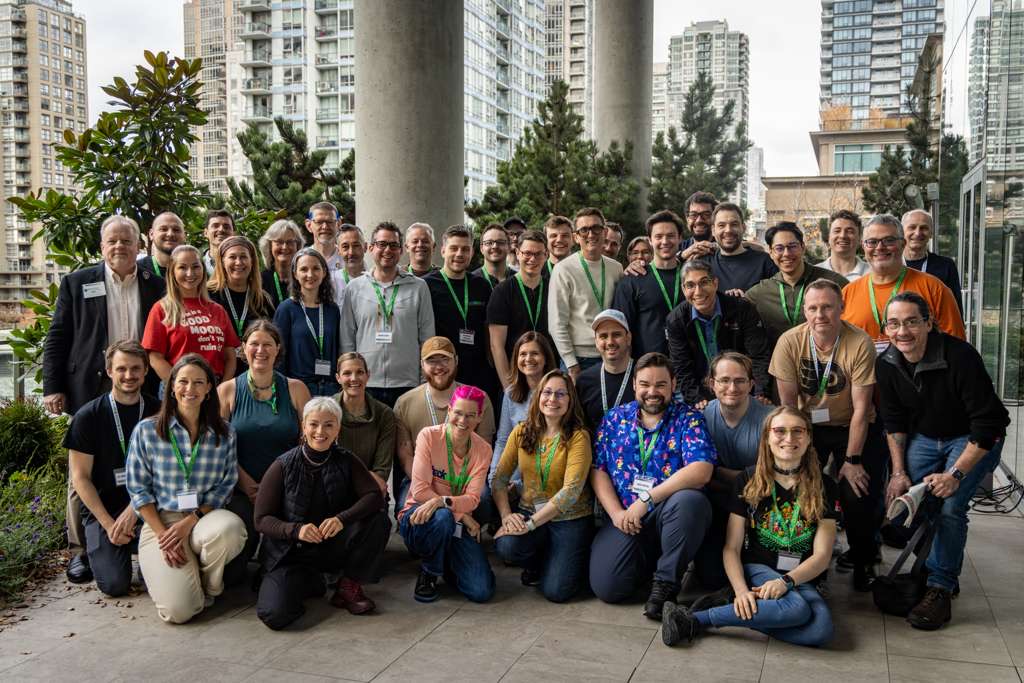
Author’s note: My participation in H_ckDiabetes26 was supported by a scholarship from The Nightscout Foundation and community contributions, including Loop and Learn support for the conference fundraising campaign. The views and reflections in this article are solely my own and do not represent the positions of the organizers, organizations, or community members who supported the event.
Friday the 13th. A Perfect Day to Fly Across the World.
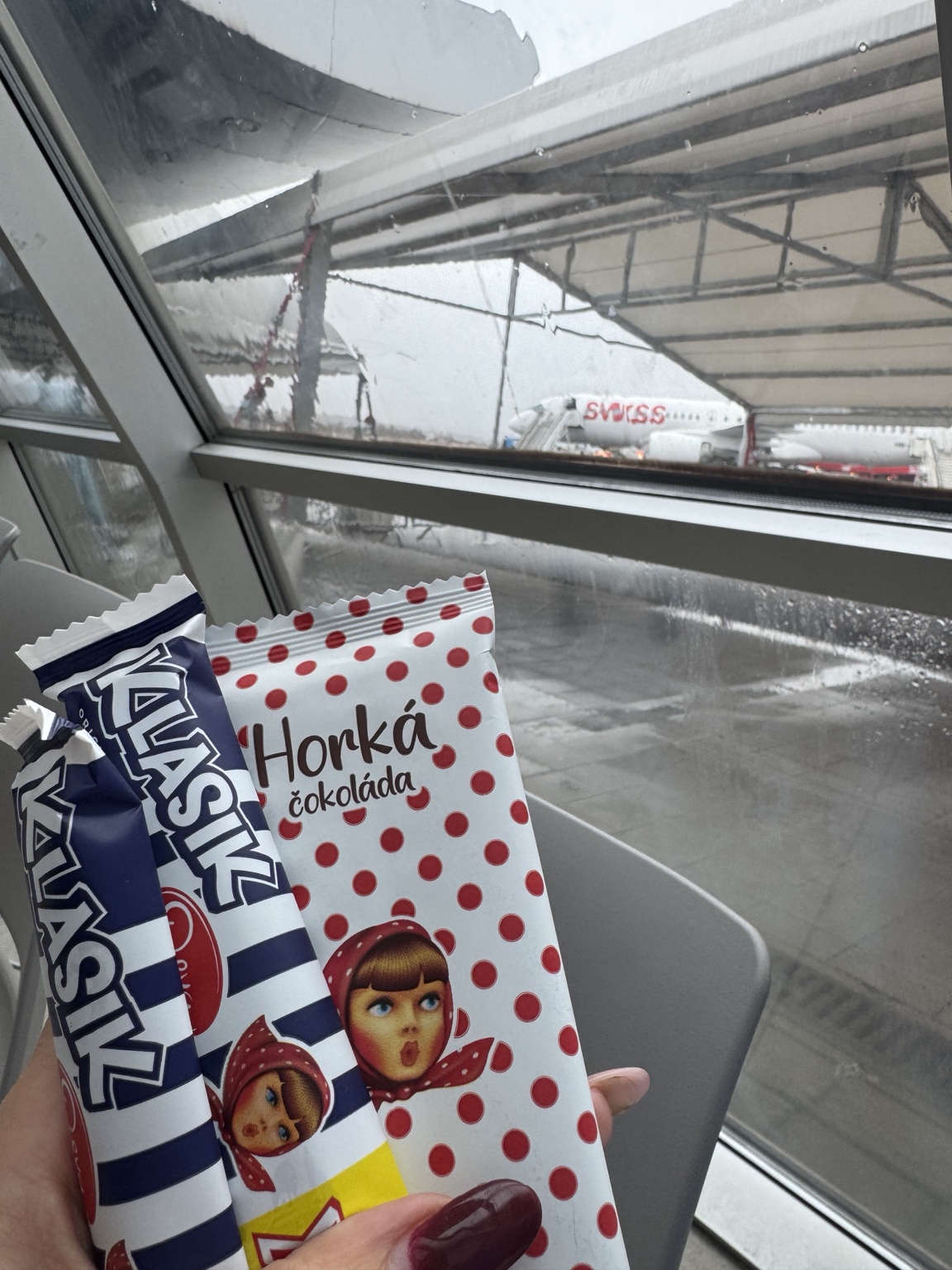
On Friday, November 13, I set off for Vancouver, Canada, to attend H_ckDiabetes26, where the #WeAreNotWaiting community was coming together. But Friday the 13th lived up to its reputation. A major technical failure in the United States disrupted communications between air traffic control centers. For safety reasons, the Federal Aviation Administration (FAA) suspended departures nationwide for several hours. Thousands of canceled flights, missed connections, and widespread chaos followed, affecting many of our attendees. My roughly 24-hour journey to Vancouver turned out to be one of the less dramatic ones. Some of us were stranded at airports; others had to return home after their flights were canceled. Marion, for example, headed back to the airport after already getting home. One group chose to rent a van rather than wait indefinitely and drove for several hours across the states. Despite enormous effort, not everyone managed to arrive. When one option failed, people looked for another. A fitting start to a #WeAreNotWaiting gathering.
What exactly is H_ckDiabetes?
H_ckDiabetes is not a conventional conference. No commercial exhibition booths or marathon of lectures. It is a hackathon—several days of intensive collaboration among people who often know one another only online during the rest of the year. Developers, testers, researchers, healthcare professionals, educators, and users work together to develop and improve open-source diabetes technologies. The roots of #WeAreNotWaiting go back to 2013, when people with diabetes and parents of children with diabetes, with exceptional technical expertise, began joining forces to develop solutions that existing technologies couldn’t provide. They decided to create solutions they would otherwise have to wait for. Their collaboration gradually gave rise to Nightscout, OpenAPS, Loop, AAPS, and other newer community projects. Many of these are open-source AID systems: they link a glucose sensor, an insulin pump, and an algorithm that automates insulin delivery. Open-source software has publicly accessible source code, allowing the community to contribute to its ongoing development.
In-person developer gatherings have a long history in this movement. After a break of several years, which included the COVID-19 pandemic, the tradition was revived in San Diego in 2024, largely thanks to Theresa Hastings, now CEO of The Nightscout Foundation, and Tim Gunn. Vancouver followed in 2025; this year, more than 60 participants came together from around the world.
A gathering made possible by an entire community
An event like this takes not only a great deal of organizational work but also funding. In 2025, more than 400 donors contributed over USD 50,000 to make the gathering happen. For H_ckDiabetes26, fundraising reached USD 81,080—108% of the original USD 75,000 target. Behind that result were organizers, individuals, donors, and a wider international community. Everyone contributed in their own way: money, time, contacts, or spreading the word. Loop and Learn (LnL), an international community dedicated to educating and supporting open-source AID users, was also actively involved in the fundraising campaign. You probably saw our appeals in the Facebook group, newsletter, Discord, Instagram, and on team members’ personal social media accounts. Thanks to support from The Nightscout Foundation, donors, and the efforts of many people, I was able to attend, too.
If you are interested in the history of #WeAreNotWaiting, you can find our #BeyondTheCode series on Loop and Learn’s Instagram, introducing key milestones and people behind the movement.
Why weren’t there more live photos and ‘breaking news’ from Vancouver?
If you follow my reports from professional conferences, you may have noticed fewer updates from Vancouver this time. At the very beginning, we agreed to an off-the-record approach: respect participants’ privacy and do not publish photos, recordings, or the contents of informal discussions without their consent. This allowed developers to speak openly, test ideas, and share work in progress without informal conversations being mistaken for confirmed technological announcements. Such announcements remain the responsibility of the relevant projects and The Nightscout Foundation. For me, this was an interesting experience. Instead of constantly documenting the event, I had more time to listen, talk, and get to know people. That is why this report is more personal than my usual conference coverage.
When digital friendships meet in real life
I’ve been working with people from Loop and Learn for years. As an international volunteer team, we support open-source AID users 24/7. We create and review educational resources, organize community gatherings, and connect users with developers. In addition to my work in the global team, I’m involved with the Italian and Slovak communities. That shared passion has gradually connected me with many others throughout the wider #WeAreNotWaiting movement.
Early that morning, I helped Kelli with preparations and participants registration. That’s where H_ckDiabetes26 truly began for me. It was wonderful to welcome people whose names I knew from everyday conversations and whose work I had followed for years. That moment when you look at each other, suddenly realize who is standing in front of you, and exchange a warm smile and hug instead of formal introductions. Mike P., Alison H., Magnus H., Daniel J., Claudia L., and many others. It was lovely to switch to Slovak for a moment and chat with Miloš Kozák, the creator of AAPS, from neighboring Czechia. He is one of the important pioneers of open-source automated insulin delivery—and, a legend to many. Deserved. I also finally had an opportunity to exchange a few words with Rayhan Lal, a diabetologist and researcher at Stanford University. Dana Lewis and Scott Leibrand were among the participants, too. They are those responsible for a whole new era: automated insulin delivery. When they shared OpenAPS, the first community-built system of its kind, with the world in 2015, they opened up an entirely new direction for diabetes technology. Being in the same room with people whose work has had such a profound impact on a world that I am now part of was extraordinary.
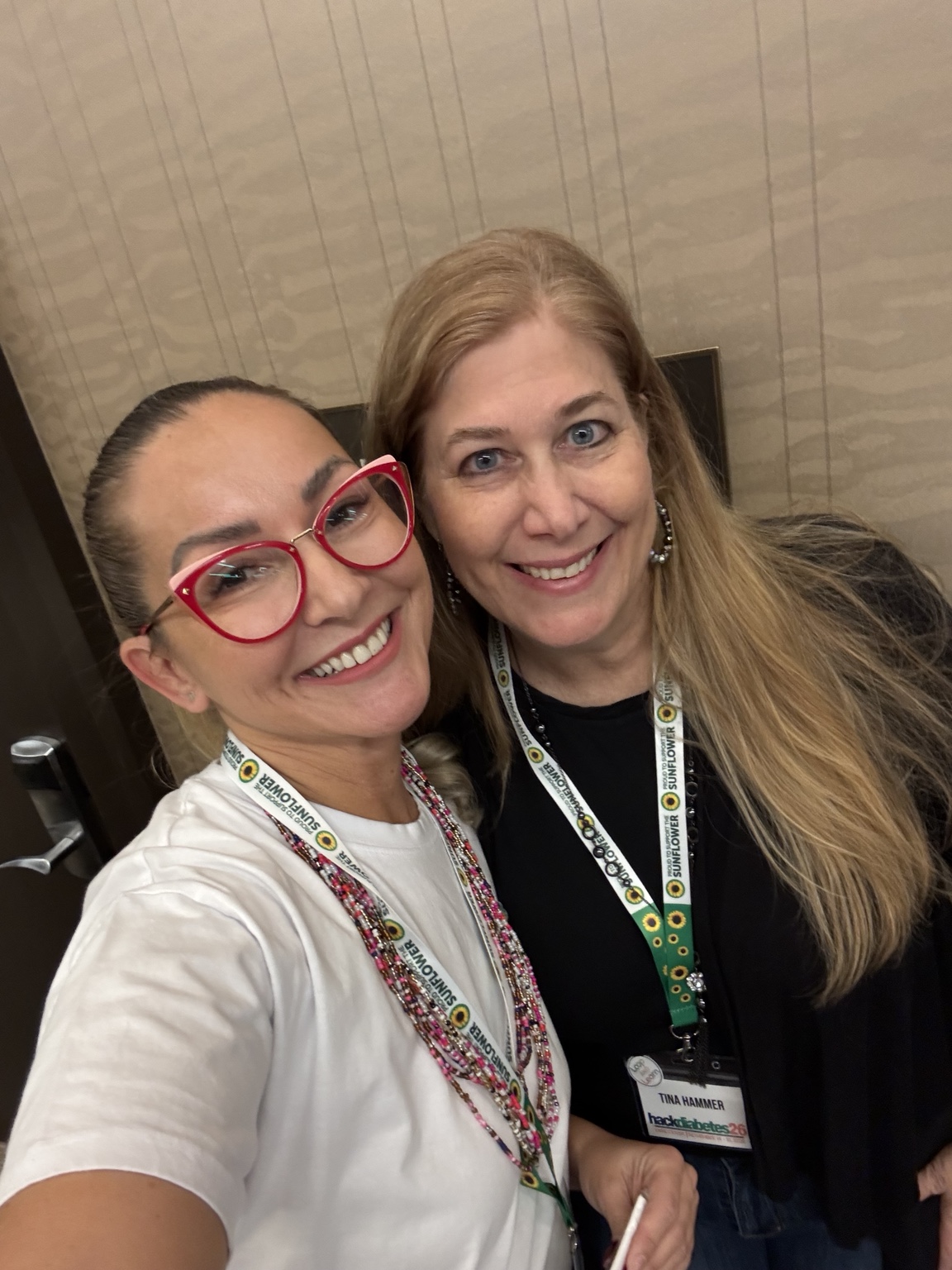
There were many other familiar figures from Trio, Nocturne, Diabetes Cockpit, personalized variations of widely used apps, and related projects. It would be almost impossible to name everyone. And then there was Tina— Chief Editor of the LnL Newsletter and a friend. After years of working together, we finally met in person last year in Milan. This time, we had several days simply to spend together. We shared a room, long conversations, ideas, and evenings when we talked until we literally collapsed into our pillows from exhaustion. In friendships maintained across distances, those moments are precious.
James Wedding. A story that helped make our path easier
Knowing James Wedding’s name and his contribution to the community is one thing. Meeting him and hearing his story in person is quite another. When his daughter was diagnosed with type 1 diabetes, his family faced what many parents know all too well: fear, night-time checks, constant vigilance, and the need to know that your child is all right even when you are not right beside them. At the time, the available technologies did not provide families with the information they needed. In the early days of CGM in the Cloud, families and developers therefore began exploring ways to view glucose-sensor data remotely. Nightscout and the broader #WeAreNotWaiting movement grew out of that work and collaboration. The Nightscout Foundation was established in 2014 to support these community efforts. James became one of its key figures and led it for many years. Today, when we can check glucose readings remotely, it is easy to forget how difficult the road here was. I joined this journey later, when part of the hardest work had already been done. And in many ways, my path was easier. Not because diabetes had become simpler, but because people before us refused to accept that nothing more could be done. Hearing that story directly from someone who helped shape it was a real privilege.
A new chapter for The Nightscout Foundation and perhaps for #WeAreNotWaiting as a whole
H_ckDiabetes26 also offered a look at the significant changes taking place at The Nightscout Foundation. James Wedding handed over the presidency to Weston Nordgren, a longtime friend, the foundation’s former vice president, and a pioneer of the original CGM in the Cloud community. Many will remember him for his symbolic Nightscout wings, a reminder of the time when earning those wings signaled that someone had successfully joined this remarkable community. The leadership team also includes Theresa Hastings as CEO, Magnus Reintz as CTO, and Melissa Holloway as Treasurer. At this very moment came an announcement that could be highly significant for the future of community diabetes technology. The British Steve Morgan Foundation has pledged GBP 1 million to The Nightscout Foundation over four years. The foundation has long supported research into new treatments for type 1 diabetes, including the Type 1 Diabetes Grand Challenge, to which it committed GBP 50 million. Its involvement also has a personal dimension: Sally Morgan, a member of the foundation’s board, has a son who was diagnosed with diabetes at the age of seven. This grant, however, has another equally important aim: supporting technologies that help people with diabetes in everyday life today. Funding is intended to expand development capacity, strengthen user support, improve documentation, and create more stable conditions for long-term development. And that is where things become most interesting to me. Looking at the history of #WeAreNotWaiting, we see a journey from the days of the rogue cowboys—technological rebels who built the solutions they needed outside conventional systems—to an international movement whose technologies are now used by tens of thousands of people. Their value is supported not only by user experiences but also by scientific evidence, international expert consensus, and professional recommendations. This progress was achieved primarily through volunteer work, shared knowledge, community support, and individual donations. That is exactly why this funding could mark such a significant turning point. Some of the daily burdens that developers and volunteers have faced for years may become lighter. More stable funding could create room for development itself, systematic support for projects, and longer-term planning. We can already see changes in how information is communicated: for example, coordinated announcements from The Nightscout Foundation about Omnipod 5 and Tandem Mobi across Loop, Trio, and AndroidAPS. Each project maintains its independent development, while important information increasingly reaches users through a coordinated approach. How far can a community go when it has already achieved so much without this kind of financial backing? And what new possibilities might this open for diabetes technology? With these opportunities, however, the foundation faces a considerable challenge: How do we preserve openness, independence, volunteer energy, and room for individual initiative while creating the conditions for sustainable development? It will be fascinating to see how this new chapter affects The Nightscout Foundation, collaboration between projects, and the wider direction of #WeAreNotWaiting.
Where the future of open-source AID takes shape
Developers had a separate room where they could work without interruption. Elsewhere, there were roundtables, workshops, and informal conversations. I took part in sessions on AAPS 4.0 and its companion app Client, the redesign of The Nightscout Foundation website led by Dan R., a Nocturne workshop, discussions on future integration and testing of Boost for Trio, and other gatherings. I also found the collaborative workshop on visions for The Nightscout Foundation’s future, led by Matt L., very valuable. I led a roundtable on diabetes stigma. Even among people who develop or use open-source AID, it matters to talk about prejudice, misunderstanding, and the obstacles we encounter. An international expert consensus already offers healthcare professionals guidance for working with users of these systems. But having a professional document does not mean that negative experiences have disappeared from daily life. For me, it was an opportunity to bring a topic I care deeply about into our technology community. I would like to explore stigma within the open-source AID community in much greater depth in the future.
What comes next? And what else might become possible?
Some of the most interesting conversations happened outside the conference rooms. Rob’s vision, for example, offers a different perspective on how future AID technologies might work. Another possibility I keep thinking about is AAPS running in an iOS environment. I witnessed another extraordinary moment alongside Tina Hammer—one that made history in Canada. From Canada, Tina successfully delivered a remote insulin bolus to her son using LoopFollow on an Android phone! Until then, we had known this possibility from iOS. Behind it was developer Jonas B., who did not even attend H_ckDiabetes26 in person. Working from Europe, he prepared and tested remote bolus delivery in an Android solution under development together with Tina. We were thrilled!
This is another example of how community developers can push technological boundaries across platforms. It also raises one of the questions about the future of open-source AID that matters most to me. Will we one day be able to choose the app and algorithm that suit us best, whether we use an iPhone or Android, and combine them with an ever-wider choice of insulin pumps and sensors? This is not simply about adding another feature to an app. It is about making decisions based on the needs of a person with diabetes, rather than being limited by the platform on which an algorithm runs or which devices can communicate with each other.
Perhaps freedom of choice and greater interoperability will be among the defining topics of the next chapter of #WeAreNotWaiting. Many ideas and possibilities were discussed at H_ckDiabetes26. Not all will yield immediate results, and not all will ultimately reach users. Yet gatherings like this create collaborations whose significance we may only appreciate later.
An award I didn’t expect
The event concluded with voluntary presentations by developers sharing results, new ideas, and collaborations that emerged during the gathering. There were also original community awards. And one brought an unexpected surprise for me: Tina Hammer and I received a special award for connecting H_ckDiabetes26 with the Loop and Learn community. It was a lovely reminder that this movement is made up not only of people who write code, but also of those who help connect technology with people.
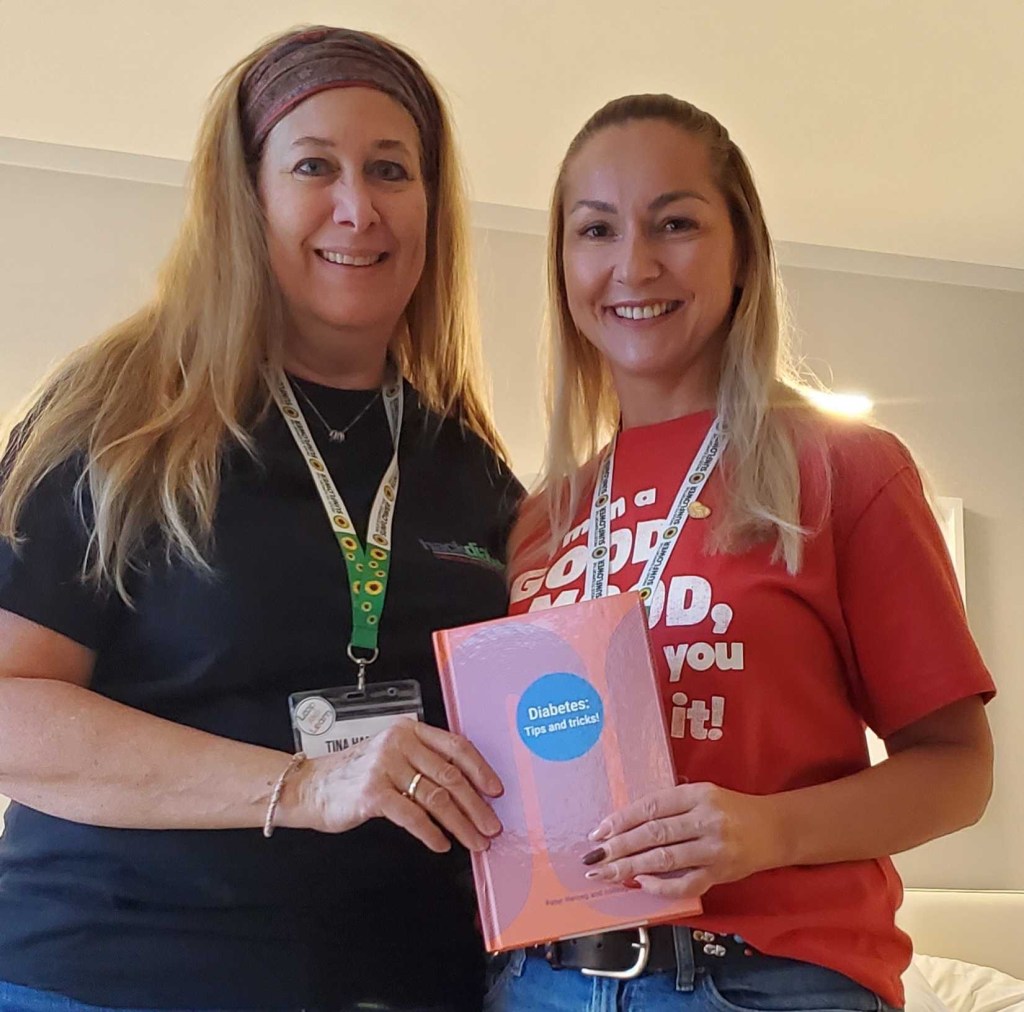
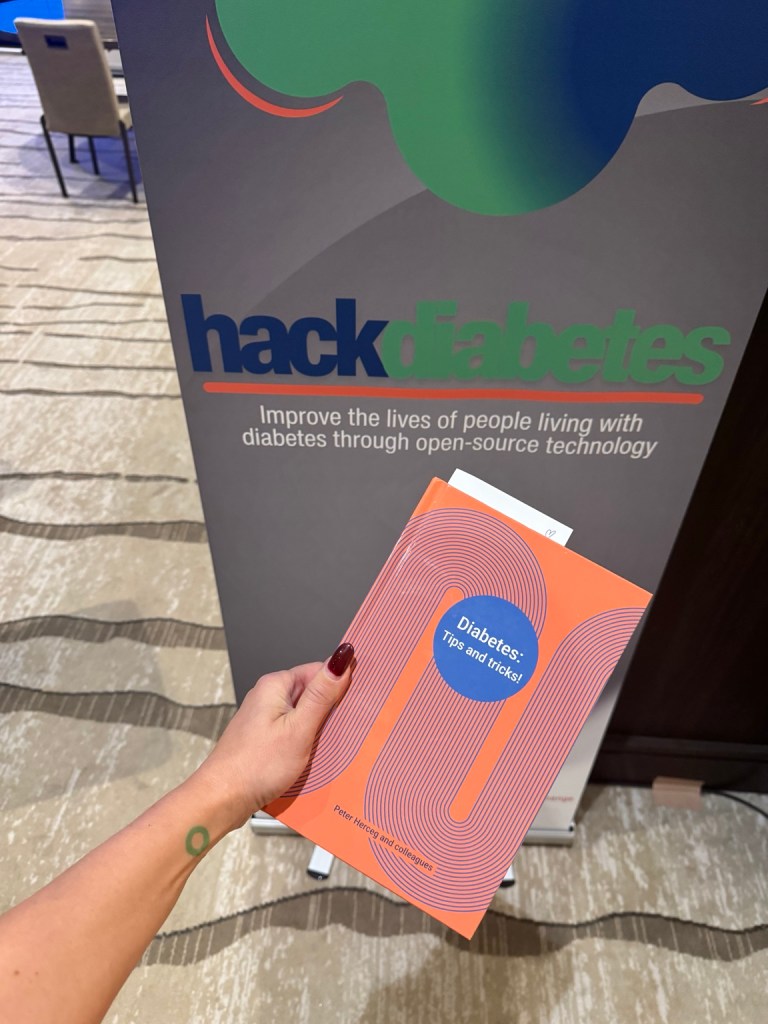
I also brought our book, Diabetes: Tips and tricks, to Vancouver—a book I co-authored. It covers the power of community, open-source AID systems, and other projects and resources that help people with diabetes navigate technology. It felt good to show this tangible example of bringing knowledge from the international community to readers in Slovakia.
More than code. So much more.
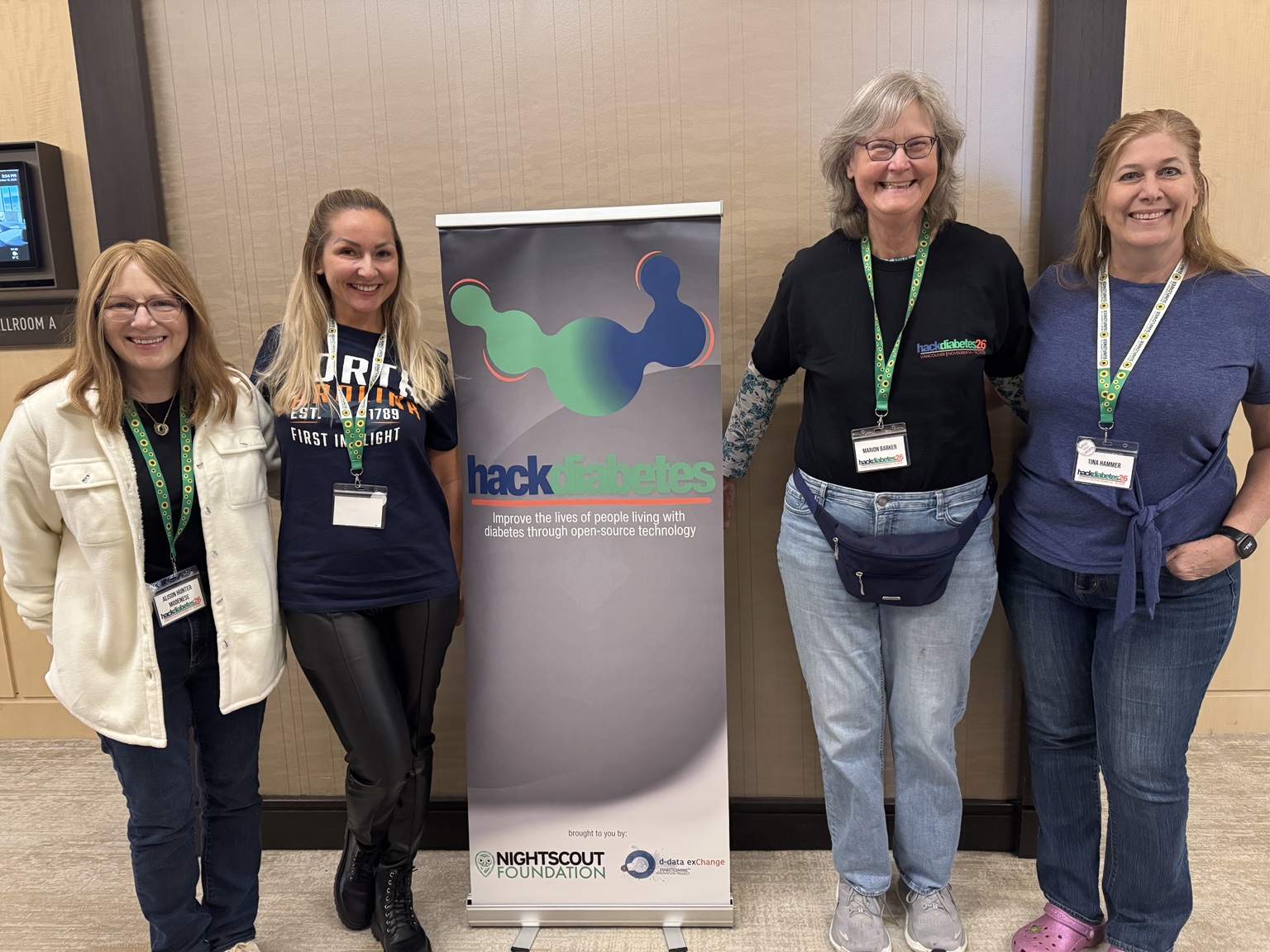
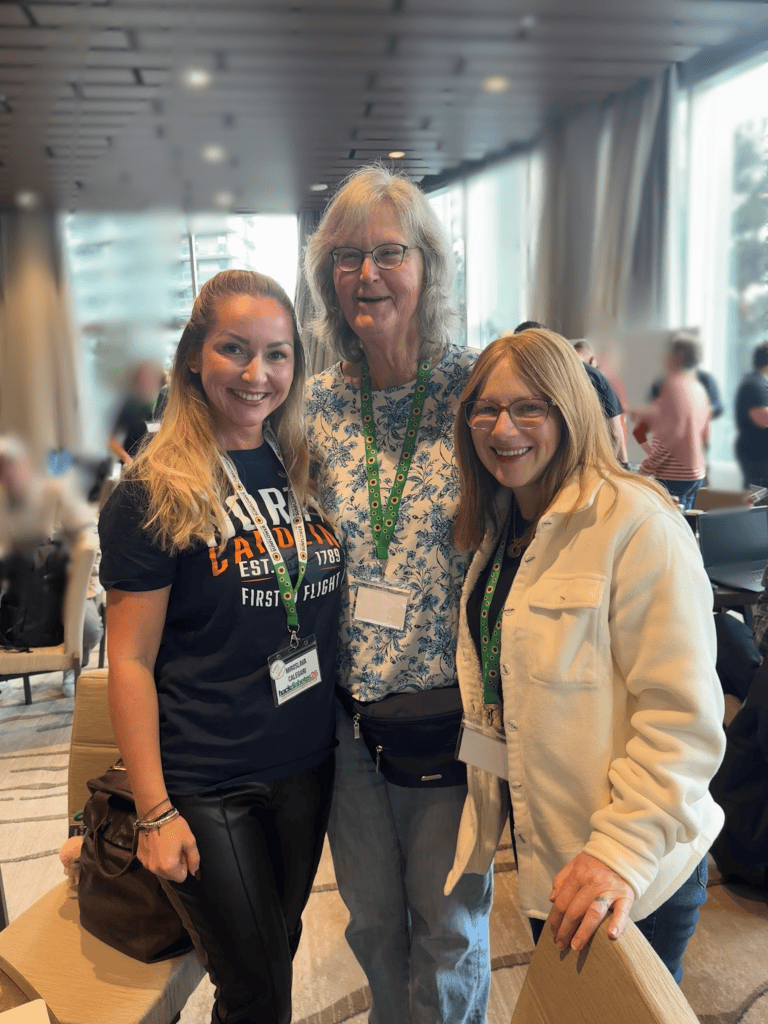
Over the years, as I have traveled to diabetes conferences, symposia, and community gatherings, my imaginary wish list of people I hoped to meet at least once has gradually grown shorter. But Marion Barker was someone I had only quietly dreamed of meeting because of the enormous distance between us. If you use open-source AID, you may not realize how much of Marion’s work lies behind technologies we now take for granted. For years, she has contributed to development, testing, preparing new app releases, and maintaining documentation. Her contribution goes far beyond any single app or project. In our Loop and Learn team, I call her “M”, after the character from James Bond. A nickname with a touch of humor, but above all, a great deal of respect. She has an extraordinary ability to keep numerous complex tasks moving behind the scenes, support others, and help make the seemingly impossible possible. I also know another side of her. In our smaller LnL team, we communicate almost every day. Years of working together have gradually formed relationships that extend far beyond work. Among technical questions, messages, and daily problem-solving, our ordinary lives unfold too. We share photos, celebrate our children’s achievements, know one another’s worries, and share sad news as well as little everyday victories. People who work remotely and may never have met can become friends along the way. When I finally saw Marion in Vancouver, after all the trouble with her journey, you can imagine my excitement! And it felt completely natural to meet in person for the first time—as if it were the most ordinary thing in the world for her to be standing there and for me finally to hug her.
Then came the moments I remember most vividly: sitting beside her, listening, and seeing those sparks in her eyes as she spoke about work to which she gives so much of herself. After all those years of developing, testing, making difficult decisions, tackling endless tasks, and carrying responsibility, her enthusiasm remains extraordinary. Not out of habit. Not because anyone expects it. You can simply see how deeply she cares about the gift she shares with all of us.
That same passion was something I noticed in so many people in Vancouver: the excitement when someone starts talking about a project they dedicate their free time to. I could not always follow every technical detail down to the “last line of code,” but that enthusiasm was impossible to miss. And so, in Canada, one of my little big dreams came true: I finally met Marion. The only person missing was Carol.
Meeting Alison was another lovely surprise. Amid all the planning and traveling, it was only at the last moment that I realized Vancouver was actually her home! Anyone who has struggled with a GitHub build probably knows her name. For many of us, she is associated with invaluable help when technology becomes difficult. But this time, it wasn’t technical advice that stayed with me—it was her kind eyes. She spoke about how precious it is to feel at home not only in your own city, but among people who truly understand you. That is exactly the feeling I brought home from Vancouver, too.
When nothing needs explaining
At professional conferences and in everyday life, we who use open-source AID can sometimes find ourselves on the margins. We do not always feel that people around us understand our choices, experiences, or why we chose this path. Sometimes we explain. Sometimes we defend ourselves. Sometimes we prefer to stay silent. In Vancouver, none of that was necessary. I didn’t have to explain why algorithms interest me, why I follow app development, or why I devote so much time to the community. I could join a discussion, ask a question, learn something, or simply listen. And finally just belong—in a place where these interests and experiences are part of our everyday lives.
As someone from outside the IT world, it was wonderful simply to watch the atmosphere and appreciate the full ecosystem: algorithm development, communication with devices, data, documentation, testing, user experience, and community support. Technology alone is not enough. An app needs documentation. A new user needs information they can understand. A family often needs someone who can help them find their way, ask the right questions, and understand both the possibilities and limitations of a particular solution. Developers create technical possibilities; the community helps turn them into knowledge, support, and responsible use in daily life. That is why I think it matters for gatherings like this to include not only people who write code but also those involved in education, communication, and user experience.
What happened to our Open Mic?
Tina and I wanted to bring some of the atmosphere to you, as we often do, through a Loop and Learn Open Mic live from Vancouver. Unfortunately, organizational changes meant the meeting could not take place at the planned time. We will certainly have a chance to share our experiences live during our regular community gatherings. Until then, you have this personal report. Official technology announcements, compatibility statements, and photos approved for publication remain with The Nightscout Foundation and the individual projects.
What happens at H_ck shouldn’t stay at H_ck
I am bringing home far more than new knowledge and contacts from Vancouver. I have even greater respect for those who create these technologies and those who help others understand their possibilities and use them in everyday life. Above all, I have memories of meetings, conversations, and friendships that mean the most to me. Thank you to The Nightscout Foundation for the scholarship, to the organizers and volunteers for their work, to Loop and Learn, and to everyone who donated to support H_ckDiabetes26. Your contributions brought together people who collaborate across continents all year long, creating room for ideas and partnerships whose true significance we may only see in the future. Looking back at how far we have come as a community, I realize one more thing. We used to be the ones looking for help and answers. Today, we have the opportunity to help others find them. Because the true strength of #WeAreNotWaiting lies not only in the technologies being developed, but in the people who turn their knowledge, experience, and time into new possibilities for others.