Words Have The Power
When we were kids, maybe someone told us: “If you keep eating all those sweets, you’ll become diabetic.” Or maybe someone referred to a person by saying: “He’s a diabetic.” Spoke as if that word sum up everything about them. Phrases like these seem harmless — but they’re not. They create labels. They make you feel like there’s something to explain or apologize for.
These statements reflect misconceptions that feed stigma*. Stigma makes people living with diabetes feel misunderstood or judged. They may even feel blamed for something they didn’t choose. As if managing diabetes wasn’t already hard enough, this language makes it even harder. And the problem doesn’t stop with casual conversations. It seeps into media, school programs, healthcare protocols.
Language that is vague, reductive, often unconscious — only widens the gap, instead of building understanding.
Many people believe that type 2 diabetes is simply the result of bad choices. They think that if someone just ate better and exercised more, they wouldn’t have developed it. But the truth is far more complex. Diabetes is shaped by genetics, hormones, and many other factors. No one gets to choose these factors. These myths spill over into type 1 diabetes too. People sometimes mistakenly believe that the right diet could eliminate the need for insulin. They also think a child might just “grow out” of it.
*Stigma refers to the negative and false beliefs that a society or group of people holds about something — in this case, about diabetes.
History
The concept of diabetes-related stigma has evolved over time, gaining increasing attention in recent decades. Historically, diabetes care focused primarily on the medical side of things. However, our understanding of the social and emotional impact has grown. The stigma surrounding diabetes has started to be more widely acknowledged.
Early descriptions of diabetes-like symptoms appear in ancient Egyptian and Greek medical texts. However, a true understanding of the disease, including its causes and treatment, is starting to take shape only in the last few centuries. Diabetology is therefore a relatively modern area of medicine, becoming a distinct discipline only in the 20th century.
But it is likely that the stigma surrounding diabetes also has its roots in the past. One historical approach that may have significantly shaped it was the Katsch Method. The German internist Karl Katsch believed in strict discipline to prevent complications. He focused on teaching his patients how to be “good patients.” In the 1940s, he introduced his principles of diabetes treatment: strict diet, fixed insulin doses, and regular physical activity. Precisely calculated carbohydrates and set insulin doses were intended to ensure stable control of the disease. With support from the medical community, this approach spread widely and became standard practice. (And you may realize that the approach to type 1 diabetes management hasn’t changed much since 1937 — even today, in 2025, in a lot of places.)
For many years, it was believed that patients had to follow strict instructions to the letter—regardless of their individual needs. This rigid approach was passed down from generation to generation, and its legacy is still visible today.
Even with all the progress in modern medicine, many diabetologists and endocrinologists continue to base their practice on these outdated principles.
Even though Katsch’s approach became the standard, there was another path.
As early as 1929, Stolte introduced a radical idea: what if insulin adapted to food, instead of food adapting to insulin? A concept that was controversial at the time — but later proved to be groundbreaking.
Stolte was ahead of his time, but the world wasn’t ready…
Are we ready now?
Even though Stolte’s idea of flexibility in diabetes management slowly began to take hold,
society’s perception of the disease has been changing at a much slower pace.
What’s interesting is that stigma doesn’t only come from the outside. We often find ourselves trying to determinate the “right” kind of diabetes life. Some follow Bernstein’s low-carb model, others thrive on high-carb diets. There are vegetarians, people practicing Ramadan, people influenced by their cultural habits, athletes competing at high levels, and people living quiet, everyday lives without needing to prove anything. Every single one of us is simply doing what we need to keep going — and that’s completely fine. If we want the world to stop seeing diabetes through a lens of prejudice, we need to stop passing judgment among ourselves too. We have to understand that we change over time. Our approach to diabetes should reflect our individual needs at any given moment — not bend to rigid, one-size-fits-all rules. No one living with diabetes should feel like their experience is less valuable or their challenges less important, just because they look different. There’s no single right way to manage diabetes. It comes in many forms — but in the end, we all live the same reality: 24 hours a day, 7 days a week.
Although people with diabetes have faced misunderstanding for a long time, it wasn’t until the 21st century that diabetes stigma began to be taken seriously as a topic of research. The first systematic study, published by Schabert, Browne, Mosely, and Speight in 2013, showed that diabetes-related stigma has serious psychological consequences and can negatively impact both treatment and the overall quality of life of those living with the diagnosis.
In 2012, the #LanguageMatters initiative began in Australia, when Jane Speight and Renza Scibilia highlighted that the way we talk about diabetes can have a significant impact on people living with it. In 2017, the initiative spread to the USA, where Jane Dickinson led efforts to promote more positive language around diabetes. In 2018, under the leadership of Prof. Partha Kar, NHS England published the “Language Matters” document, offering practical examples of how to use language that supports positive interactions with people living with diabetes. Diabetes Canada also adopted a similar approach, emphasizing the importance of language in communication with patients. By 2020, the initiative had expanded to India, Latin America, and France — becoming a truly global movement.
A Global Problem That Can’t Be Ignored
- On November 23, 2022, the European Parliament adopted a resolution highlighting the urgent need for a comprehensive approach to diabetes care. It also called for the elimination of stigma and discrimination, and for the promotion of integrated, person-centered care that respects the dignity of people living with diabetes.
- According to the International Diabetes Federation (IDF), 58% of people with diabetes have experienced stigma or discrimination — a striking number that reveals just how far-reaching this issue is. (idf.org)
- The World Health Organization (WHO) has acknowledged the deep and lasting impact of stigma on the lives and well-being of people living with diabetes. (who.int)
The same approach has been adopted by leading scientific and healthcare organizations:
- American Diabetes Association (ADA): Published language recommendations for diabetes care, emphasizing the importance of neutral, non-judgmental communication focused on empowering the person living with diabetes.
- Association of Diabetes Care & Education Specialists (ADCES): Released guidelines on respectful language use across conversations, research, education, and diabetes-related publications.
- International Society for Pediatric and Adolescent Diabetes (ISPAD): In its clinical guidelines, ISPAD highlights that language in diabetes care must be supportive and respectful, to avoid creating barriers between healthcare professionals and patients.
- European Association for the Study of Diabetes (EASD): Partnered with ADA in consensus reports stressing the value of using neutral, non-stigmatizing, fact-based language. For example, in a joint report on the management of hyperglycemia in type 2 diabetes, it is stated that “the language used in diabetes care should be neutral, non-judgmental, and evidence-based.”
In January 2024, The Lancet Diabetes & Endocrinology published an international consensus statement titled “Ending Diabetes Stigma and Discrimination: an international consensus statement based on evidence and recommendations,” developed with the collaboration of 51 authors. The document highlights the urgent need to end stigma and discrimination related to diabetes, both within healthcare systems and in the media.
#LanguageMatters I #EndDiabetesStigma I Diabetes U.N.S.E.E.N
Significant initiatives aimed at combating misconceptions about diabetes are bringing together patients, professionals, and advocates with the shared goal of eliminating stigma and discrimination associated with the disease.
On my social media channels, you already came across #EndDiabetesStigma, and some of you know about my (still) dream to publish #LanguageMatters in Slovakia. I’m also inviting you to take part in DIABETES U.S.E.E.N. The goal? To uncover the narratives behind stigma — to recognize the thought patterns that fuel it, to bring them to light, and gradually transform them through education, empathy, and fact-based information. Across nations. Across languages. This global initiative was created by Jazz Sethi, Emma Doble, and Dr. Partha Kar. And for me, it’s an honor to be a small part of it — to help make it known and understood in my native language: Slovak but also Italian.
These initiatives highlight the urgent need to keep fighting the stigma so that people receive not only the medical care they need, but also the respect, empathy, and support they deserve.
Only then we can talk about truly inclusive and fair care for everyone living with diabetes.
I learned about the #LanguageMatters initiative in 2023 and quickly realized that is not just a trendy hashtag.
Changing the language we use is the first step toward removing prejudices. I truly believe that “Language Matters”. That’s also why I’ve chosen to speak about this topic again – with you, to share it across different platforms, and to bring it where it’s most needed.
It’s not enough to know that stigma exists – we must actively reject it, confront it, and change the way we talk about diabetes.
In 2023, I felt like Stolte in the public space – “ahead of my time.” Now I stand before the question: Is our – your world ready today?
It’s not a new problem, but it’s still here
Even though modern diabetes management keeps evolving, prejudice and misunderstanding still persist. Stigma isn’t going away – it’s just changing form. It may not always be obvious, but it’s still present in everyday situations. It shows up in daily conversations, in the media, in healthcare, and in schools, where common phrases are repeated without thought – reinforcing harmful stereotypes.
When we hear on TV that “diabetes is the result of a bad lifestyle”.
When educational programs, experts, and the media continue to use inappropriate terms like calling someone a “Diabetic” as a label, or outdated expressions like “severe diabetes” or “sugar disease,” they end up reinforcing stigma instead of truly educating or supporting people.
When we ask a child with diabetes: “Can you eat this?”.
When we hear someone with diabetes say: “I have just mild diabetes, I don’t need insulin.”
When we say to a colleague: “I can’t imagine having to give myself injections every day like you do.”
My grandfather had diabetes — they took his leg but not long after, he died.
These are just a few examples of why we all need to join this conversation and say a clear NO to diabetes stigma. Each of these situations hurts someone and keeps us in the dark.
That’s how stigma survives – year after year, decade after decade. That’s exactly why it’s so important to raise awareness and speak up.
What can we do?
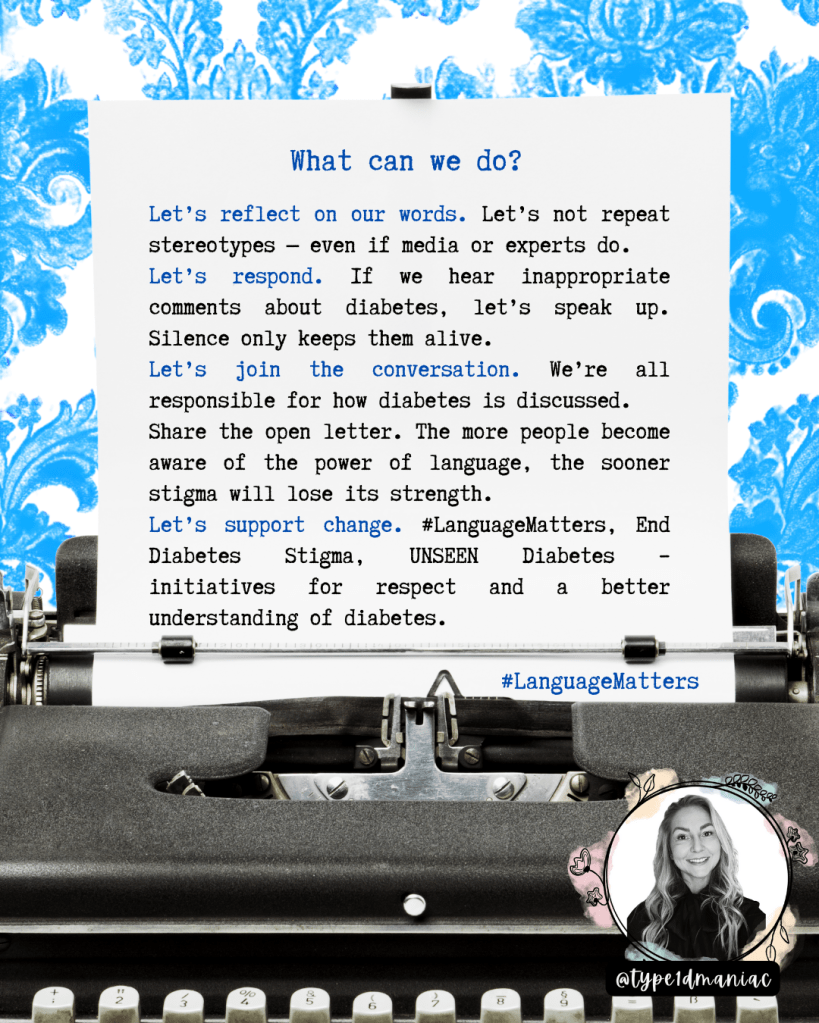
How do we talk about it the right way?
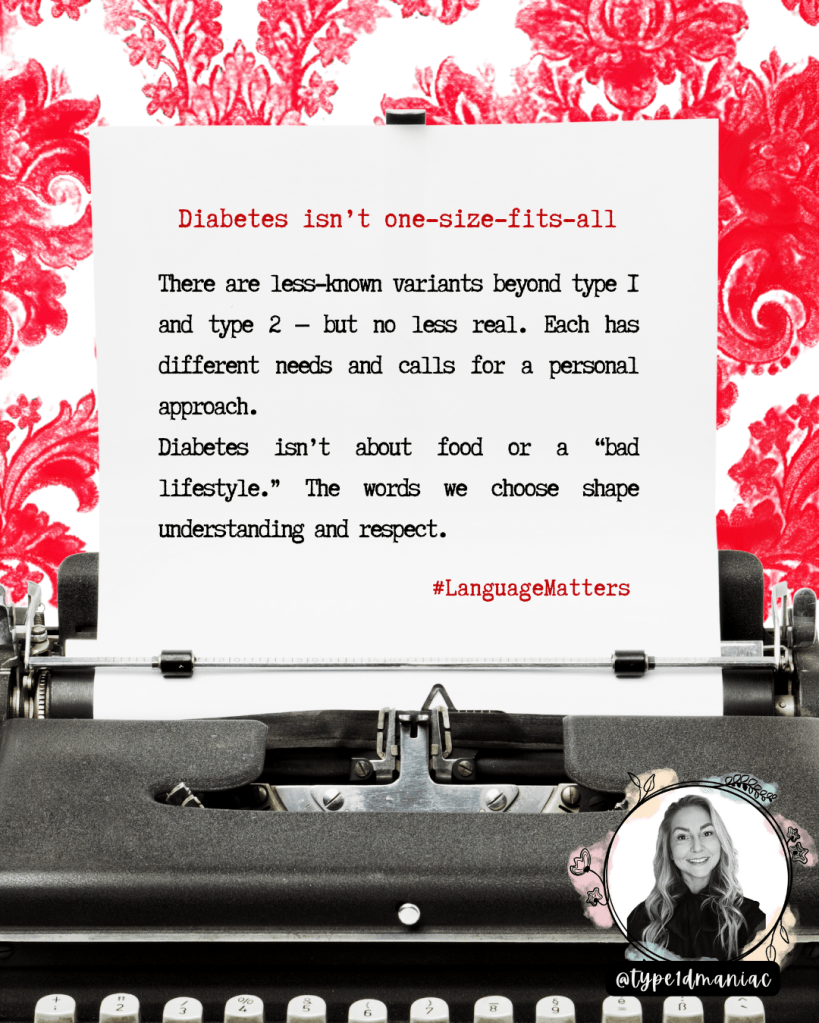
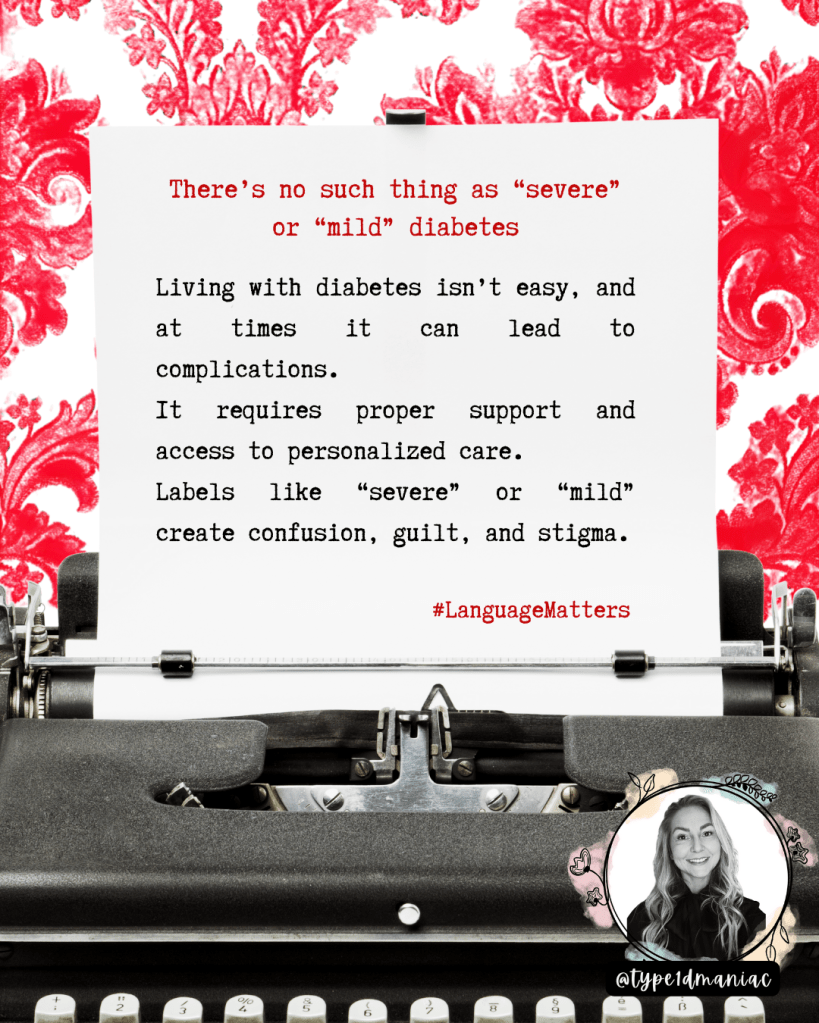
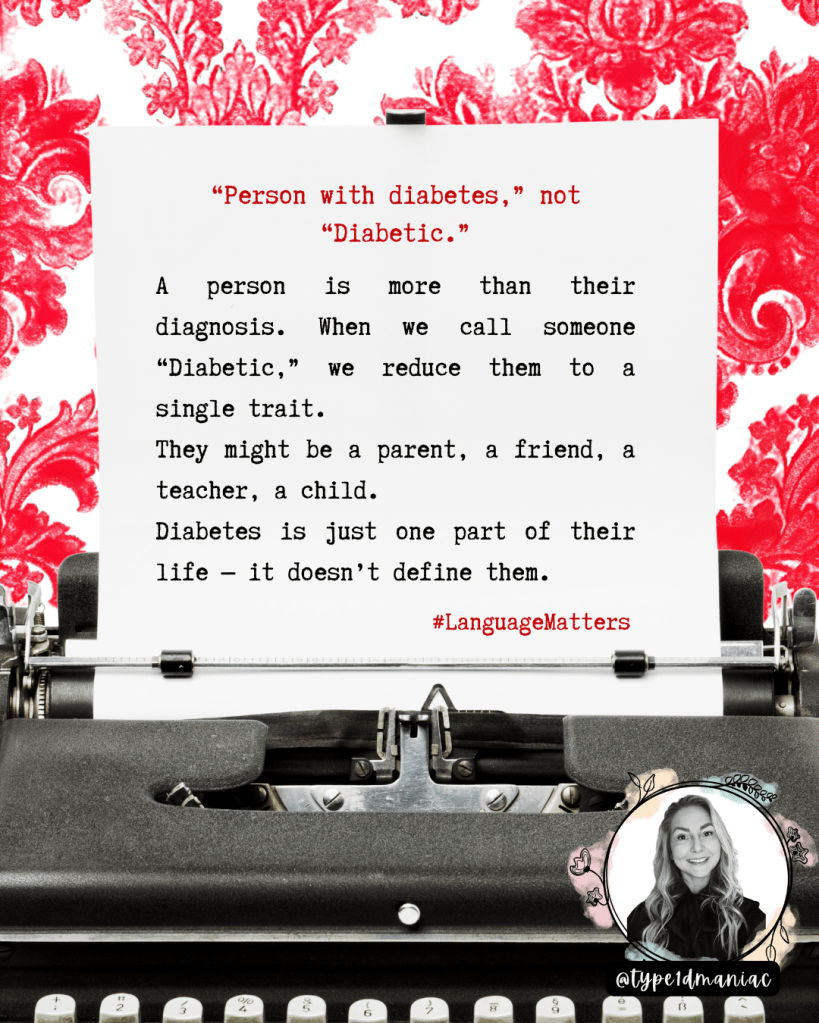
The words we choose today shape the world we’ll live in tomorrow. Sooner or later, it will affect all of us – maybe someone close to us, maybe ourselves.
And when that moment comes, it will matter whether we choose respectful language or contributed to prejudice.
Closing Tips
- For journalists, presenters, and influencers: think about how you write and speak about diabetes. Don’t reinforce myths. Share facts.
- If you’re a healthcare professional: consider how you speak to your patients. Language impacts their motivation and mental well-being. Visit #LanguageMatters
- If you’re a parent, teacher, colleague, or friend: don’t assume you know what diabetes means. Ask, learn, and be supportive.
- For anyone reading this: let’s talk about diabetes the right way.
And if you’re reading this article, it means you care. Share this message. Talk about it on TV. Write about it. Use the right words. Every step we take makes a difference.
Now is the time. If we stay silent, the stigma will last for decades to come.
Let’s talk about diabetes the way people living with it deserve. With respect. Without prejudice. The right way.
Because words have the power.

 #type1dmaniac