“According to my knowledge, I am the only diabetic who survived years of imprisonment in German concentration camps. This is my story.”

Ernest Sterzer was born in Vienna and he is the only reported case of a Holocaust survivor with type 1 diabetes during World War II. He was diagnosed in 1928, just a few years after the discovery of insulin, at the age of 3. Since then, he could not survive without regular insulin injections for more than 4-5 days.
Since 1940, during wartime, the future for people with diabetes did not hold promising prospects. Even in Germany itself, they could only receive half dose of insulin prescribed from doctors. As Sterzer was of Jewish descent, the Holocaust and Hitler’s “final solution to the Jewish question” affected him personally. The genocide during World War II claimed the lives of approximately 6 million people, mainly Jews, as well as individuals with disabilities, Roma, homosexuals, and other ethnic, religious, and political groups.
At the age of 17, on October 1, 1942, Ernest, along with his parents and two siblings, was deported to the concentration camp in Terezín, Czechoslovakia.
What did he have to do to procure the insulin needed for survival?
During his two years of work in a bakery, he stole bread, which he exchanged for insulin with the mistress of a Czechoslovakian policeman who guarded the ghetto. Being discovered meant certain death for him.
His journey from Terezín continued to Birkenau. However, during the transfer, he lost a small suitcase with a camera hanging around his neck, containing a syringe, needles, and six bottles of insulin. He arrived at the camp on October 17, 1944. Along with his brother, they passed Dr. Mengele’s selection, who assigned them to work. Their mother was sent to the gas chamber.
The next morning, before the announced second transport, after days without insulin, he fell into a coma. He remembers how one of his fellow prisoners, a doctor, upon smelling the scent of acetone in his breath, told him not to fear the gas chamber, as he would surely die on the way there. He bid farewell to his brother, believing that this goodbye was forever.
This saved him from another transport, and he later realized that losing insulin during transport to Birkenau actually saved his life. When he reunited with his brother in Vienna years later, he learned that the camp they planned to transfer him and his brother to did not have a hospital, and it was not possible to obtain any medication there.
Instead of the gas chamber, two prisoners decided to take him to the hospital. There, he woke up after two days. The hospital differed from the other wooden barracks in that it had a few wooden beds. Ernest considers two things amazing. The attending doctor, a Russian Jew, had insulin available. Despite having to use a rusty needle, he did not die of blood poisoning. Ernest thus got a job as a doctor’s assistant and, instead of hard work, he took care of “just” handling the dead prisoners.
When the news spread that Russian troops were advancing on Auschwitz, Ernest recalls how Mengele burst into their barracks again. He ordered them to undress completely, and when he asked him about his illness, Ernest’s tongue froze. Admitting the truth would mean certain death for him. Lying would result in death by torture… That’s when the doctor saved his life by saying that his only problem was “swollen leg”. Ernest confirmed to Mengele that he was capable of working, which secured him a pass for the next transfer, as the only one person from the barracks.
Oranienburg
The small package of medication he managed to acquire from the doctor was confiscated by a young Jewish boy, who was under SS supervision, just before the transfer, leaving him without insulin once again. Three days later, upon arrival at Heinkel Werke, one of the largest German aircraft factories, he managed to inform one of the doctors about his type 1 diabetes.
Insulin was administered to him a few hours before he would likely have died. He also received his first meal in the hospital—a bowl of soup—three days after leaving Birkenau. He had almost forgotten that white sheets and real beds still existed… However, he couldn’t stay in the hospital, and the doctor was allowed to visit him every three days to administer insulin. This was not enough to keep him alive, and his physical condition worsened
During these days, he recalls his friend Fred Haber, who saved his life several times from certain shootings while carrying him out of the hangar during the sound of anti-aircraft sirens. After 10 days, he woke up with so much swelling in his leg that he couldn’t walk. At that point, the doctor, along with two other Jewish prisoners, moved him to a newly authorized hospital room reserved for Jews. However, after a week, the insulin supplies in the hospital ran out. Ernest awaited another transfer, this time to Oranienburg-Sachsenhausen.
After three weeks there, he woke up feeling fluid in his ear. When the doctor pierced it, pus drained from it continuously for the next three days. The doctor informed him that he had developed mastoiditis. The following day, his entire soft palate became paralyzed, rendering him unable to speak, chew, or swallow, and whatever he ingested would come out through his nose. According to the doctor, at best, he could only survive with a permanent speech disorder. Ernest later believed that the sole reason he recovered from everything and later communicated seamlessly again was his constant prayers.
Later, he was told he’d be sent to Bergen-Belsen, where gas chambers awaited. He never found out exactly what happened then. Just before the transport, a voice over the megaphone announced: “Prisoner 110223 report back to your room.” Nothing similar ever happened before or after. Subsequently, he obtained work in the hospital, serving food to prisoners and washing dishes. When an SS guard discovered that a Jew was working in the hospital, he was beaten, described as “one of the worst I’ve ever experienced.” He was assigned to forced labor, knowing he wouldn’t be able to take the same doses of insulin…
However, the doctor disagreed with reducing the doses, even after Ernest told him about his experience with hypoglycemic coma. In his memoirs, Ernest wrote: “I am quite sure that I am the only diabetic who has ever recovered from an insulin shock by being brutally beaten with rifles instead of receiving sugar.”
As Soviet forces approached Oranienburg, his survival was aided by the insulin syringe he had kept from the previous transport to Bergen-Belsen.
Death March and Liberation
He also survived a 3-week “death march,” during which he had to walk 16 hours a day. Every prisoner unable to keep pace was shot. “I remember how cautious I had to be about how many units of insulin I would take because I never knew how much food I would be able to have that day, and an insulin shock during this journey would mean death for me.” For three weeks, he didn’t wash, and he had to inject insulin through his clothing to avoid attracting the guards’ attention.
“On May 2, 1945, when I woke up, I found that the last SS member guarding us had disappeared.” American and German units were fighting in Schwerin, a town about 3km north of their location. He decided to seize the opportunity and headed towards the battlefield in a desire for freedom. After five minutes, he encountered two American soldiers who took care of him without a word.
Life After the War
After a few days, he decided to return to Vienna. At that time, he still hoped that his father and brother had somehow survived. After three weeks of searching, he found out that his brother had arrived in Vienna a day before him. And several months later, he learned that their father had met his death in the gas chamber upon arrival at Auschwitz.
When he tried to obtain insulin at prominent Vienna hospitals, he was told that they had none and that all people with diabetes had died. He realized how fortunate he was to have ended up in concentration camps. The camps that took the lives of so many millions of people had saved his one.

zdroj: Google
On August 1, 1947, along with his brother, he went to New York City, invited by their sister, who had managed to immigrate to America in 1939. Six years later, he experienced a hemorrhage in his eyes again, and by December 1956, he had completely lost his sight.
“Today, with the help of my guide dog named Sheila, I own Superior Addressing & Mailing Service, located at 1650 Broadway, New York City. I know that the success of my business, and the fact that today we can count many nationally known companies as our satisfied customers, is due to the fact that in America, everyone gets equal opportunities.”
Ernest Sterzer passed away on May 1, 1973, at the age of 48.
Ernest Sterzer’s memoir consists of 23 pages, written in English, and was donated to the United States Holocaust Memorial Museum in October 2010. Cataloged under number 2010.438. As of the time of this post, it’s not available in a digitized version for online download.
Sources: Zdroje: type1.nl, diabetes.co.uk, rciscience.ca, United States Holocaust Memorial Museum
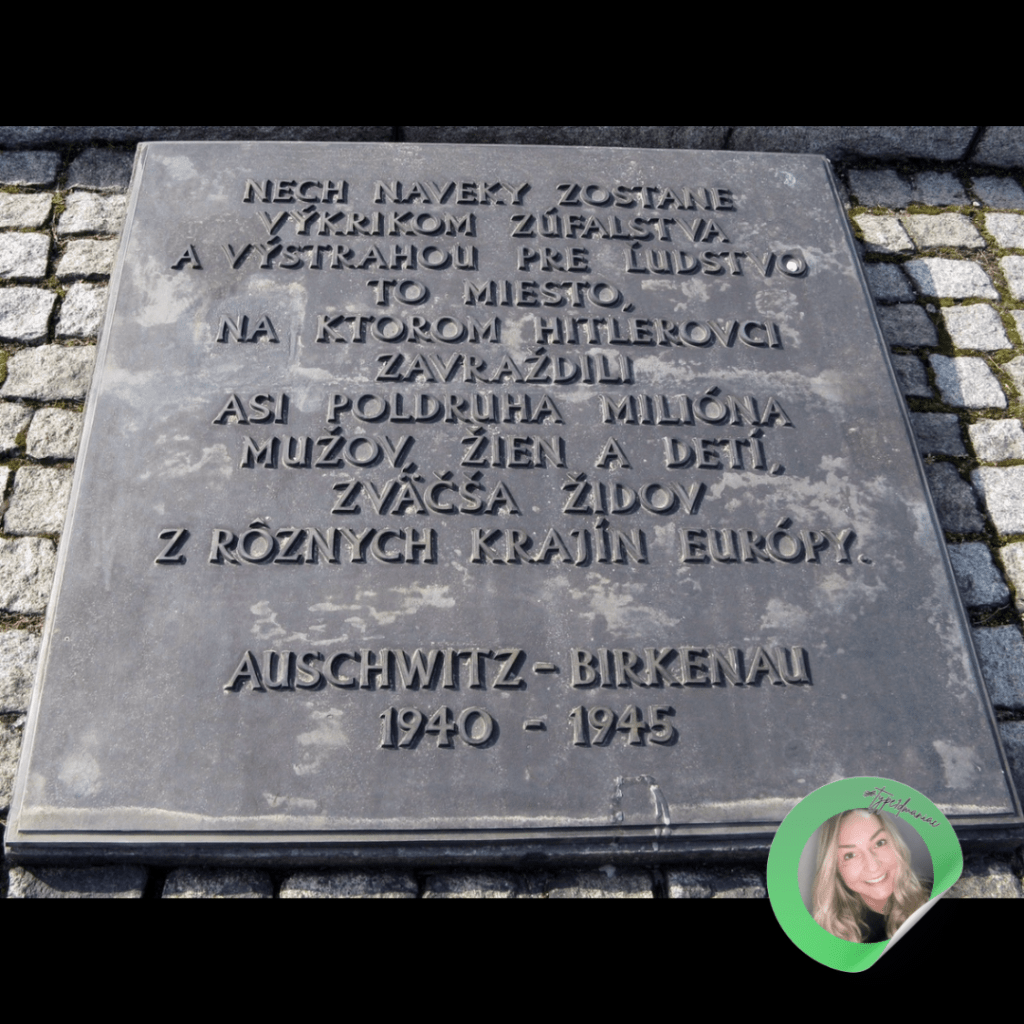
“May the place where the Nazis murdered about one and a half million men, women, and children, mostly Jews from various countries in Europe, forever remain a cry of despair and a warning to humanity.” Auschwitz – Birkenau 1940-1945
 #type1dmaniac